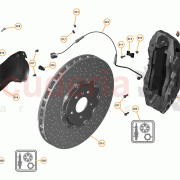
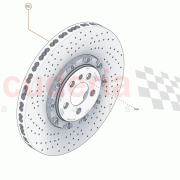
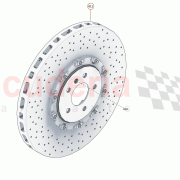
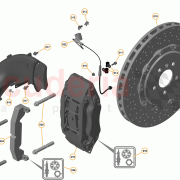
Scuderia Car Parts supplies genuine McLaren brake rotors sourced directly from OEM manufacturers. The terms brake disc and brake rotor refer to the same component — the rotating friction surface clamped by the brake calliper — and McLaren specifies this component to precise dimensional and material standards for each model and brake system configuration. Whether your vehicle is fitted with iron ventilated rotors or the optional carbon ceramic matrix (CCM) system found on Super Series and Ultimate Series models, the rotor specification must be matched to the calliper, pad, and thermal management architecture of the specific braking system. Our team supplies workshops and owners across more than 85 countries with the technical knowledge to ensure correct specification.
Haven't found what you're looking for?
The brake rotor on a McLaren is designed to manage the extreme heat generated under the vehicle's full braking capability. On iron rotor systems, internal cooling vanes run between the two friction faces, drawing air through the disc core as it rotates and dissipating heat away from the friction surface. The vane count, angle, and geometry are all model-specific: the 720S front and rear rotors carry different vane configurations to match the braking bias and calliper size at each axle. Carbon ceramic rotors use a different thermal management strategy — the CCM material itself has significantly higher thermal capacity and lower thermal conductivity than iron, meaning heat builds more slowly but also dissipates more slowly, which affects how the system should be used on track. Rotor diameter determines the leverage applied by the calliper, and any deviation from the specified diameter alters braking bias and calliper clearance.
Iron rotors should be measured for minimum thickness using a brake micrometer at multiple points around the rotor face, and replaced when approaching the stamped minimum thickness regardless of surface appearance. Lateral run-out should be checked with a dial indicator, with any value exceeding McLaren's specified limit indicating the rotor requires replacement. Surface scoring deeper than superficial polishing marks indicates pad debris contamination or prolonged use with worn pads, and the rotor should be replaced in this condition. CCM rotors should be inspected for radial cracking from the disc hat outward and surface delamination, both of which can occur following extreme thermal cycles. Never use CCM rotors for sustained braking from cold — allow a warm-up period of progressive brake application before committing to full braking loads.
Genuine McLaren brake rotors are manufactured to the diameter, thickness, vane design, and material specification that the braking system was developed and validated around. The interaction between rotor material, pad compound, and calliper bore dimensions is calibrated as a system — a rotor from a non-specialist source that deviates in any of these characteristics will alter pedal feel, braking bias, and wear rates in unpredictable ways. On CCM installations specifically, the silicon carbide matrix composition of the rotor determines the friction coefficient it presents to the matched pad compound; an incompatible rotor surface will prevent the pad from developing its intended friction level and can cause both premature wear and inconsistent braking. Scuderia Car Parts sources genuine McLaren OEM brake rotors through established manufacturer relationships.


 Please wait...